Part 4 in the Series: Implications for Our Teaching
“They may comfortably become passive consumers of their education…. It is our responsibility as faculty to not let this happen.”1
Because of some of the characteristics of iGen students (see Parts 1, 2, and 3), some of our work as teachers is both more difficult and more important. When I review these characteristics and think about my interactions with them—and with my colleagues who interact with them—a few key areas come to mind where I think we need to dig in.
Insert noises of frustration here.
I have so many thoughts but don’t want to write a book of blog posts,
so I’ll focus on just a few below.
Research & Information Literacy

I see this iGen cohort as natural researchers, in a way–in their curiosity and their readiness to act on that curiosity. As a result, they may see research processes and information literacy as unnecessary–even more than previous generations–because they already know how to “research.” But this research is fast: they quickly find, quickly believe, and quickly use information. This speed serves them well in some circumstances, not in others.
What do we do? As with all good teaching, addressing students’ prior knowledge is crucial:
“Students come to the classroom with preconceptions about how the world works. If their initial understanding is not engaged, they may fail to grasp the new concepts and information that are taught, or they may learn them for purposes of a test but revert to their preconceptions outside the classroom.”2
We know that we have to teach what research looks like and how it works in our fields, but we need to also teach it in juxtaposition with how research has worked in their lives thus far.
— How are these models of research similar? Different?
— What are their purposes, processes, and results?
— What kinds of questions can (and can’t) be answered by each?
— How are the knowledges produced by these different models different?
— Why does it matter?
Gerald Graff offers a possible entrypoint for this conversation with students in “Hidden Intellectualism,” in which he compares the “nonacademic” fascination with baseball with academic expertise.
And following on my previous points about what iGen’s learning might look like (Part 2), we can’t just tell them, “Do research this way because it’s better.” We have to “meddle” with them (Part 2), and they need to practice, struggle with, apply, and play with these different approaches to research (Part 3).
Slow Thinking & Learning
“Meaningful learning is slow learning. Students need time and practice to think, be curious, make mistakes, and re-think.”3
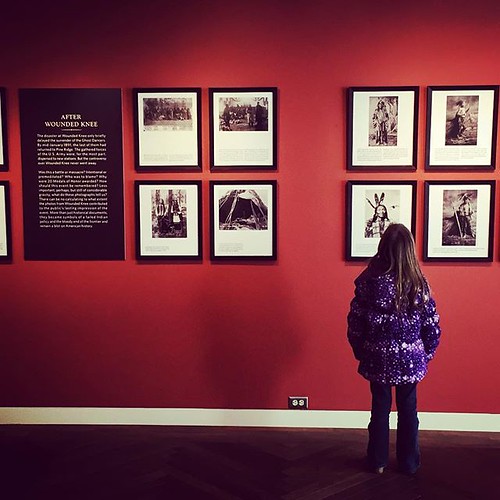
Given how they have experienced time (see “Chunked time, not narrative time” in Part 3), this generation of college students is less familiar and less comfortable with deliberation. Although some may be adept at immersive videogames, “These otherwise fast smart young people”4 need guidance and practice in work that is slow:
- Carrying out long-term projects
- Paying close and sustained attention
- Reading long texts, carefully
- Thinking and speaking in paragraphs
- “Staying in the grey of ‘not yet’”5
I’m not saying we should fill our syllabi with all of the above, but as they are relevant to our courses, let’s neither shy away from nor apologize for this kind of challenge. This is what we mean by ‘rigor,’ isn’t it?
But as I said in Part 2, “we can’t simply teach challenge and difficulty the same way we always have and expect the same result.” We can model these processes, and be explicit about their purpose. We can build in low-stakes practice, feedback, room for mistakes, and metacognition through which they reflect on these processes.
I’ll wrap up this series in Part 5 by writing about two other areas where we can (and probably should) address some gaps in their experience.
Citations
1 Christine Chun, Kelly Dudoit, Shirl Fujihara, Mariana Gerschenson, Ann Kennedy, Brad Koanui, Veronica Ogata, and Jeff Stearns (2016) “Teaching Generation Z at the University of Hawai’i” (available online here)
2 Bransford, Brown, & Cocking (available online here)
3 Nancy L. Chick & Peter Felten (2020) “Slow: Liberal Learning for and in a Fast-Paced World” in Redesigning Liberal Education (eds. William Moner, Phillip Motley, & Rebecca Pope-Ruark)
4-5 Erica McWilliam, “Teaching Gen Z” (2015), available online here
Image credits: “Search.” by Jeffrey Beall is licensed under CC BY-SA 2.0 and “There couldn’t possibly be a better…” by nashworld is licensed under CC BY-NC-SA 2.0

