On Our Syllabi
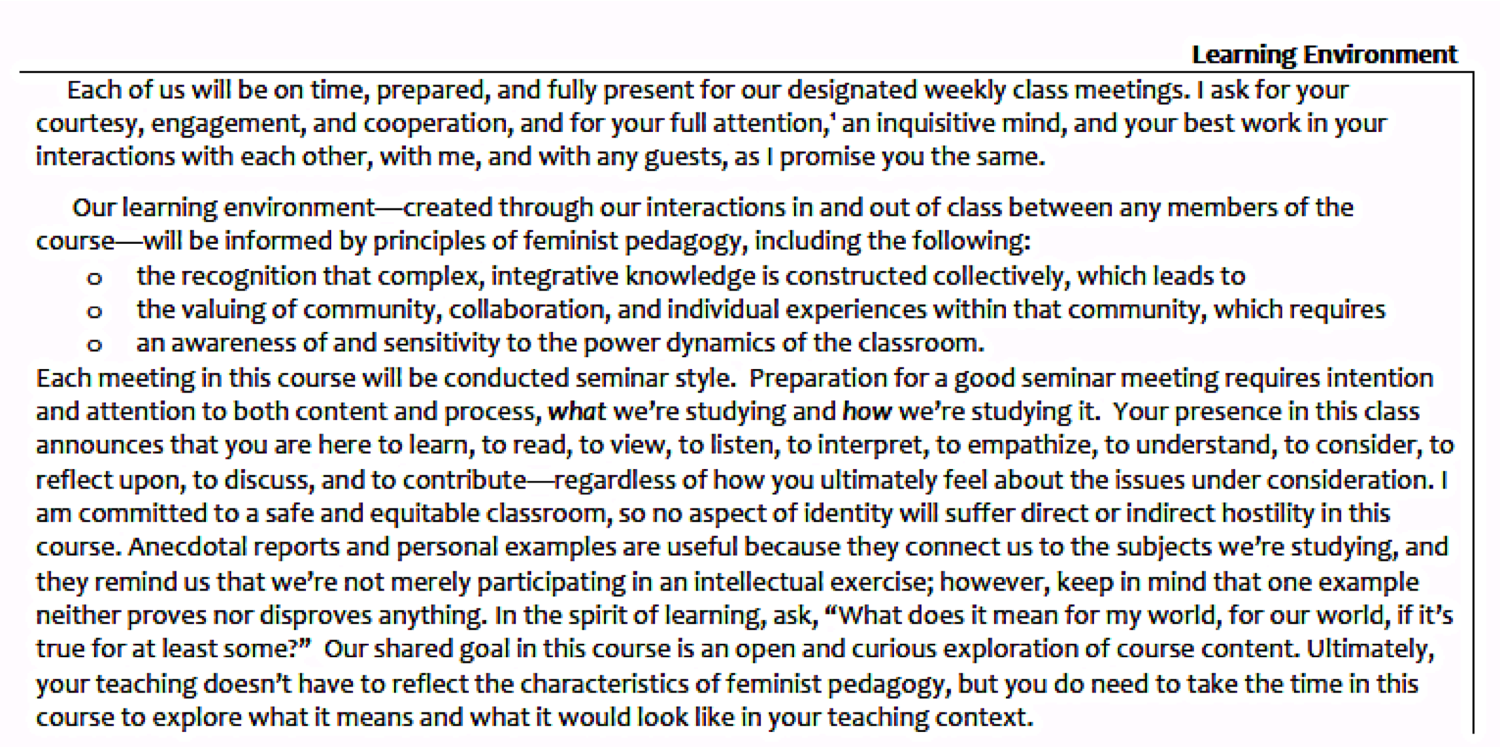
In a syllabus, the principles of feminist pedagogy might be realized with a section dedicated to an explicitly transparent commentary on course design and pedagogical choices, a statement on classroom dynamics and implicit values or assumptions, a description of an effective critical discussion (including the role of silence), providing a list of sources other than the campus bookstore to acquire course readings, a list of relevant resources of community organizations and allied university resources, and a section that addresses options for alternative forms of participation in discussions. Googling “syllabus statements of diversity” or “inclusion” will result in some templates.
In the Classroom
Ming-yeh Lee and Juanita Johnson-Bailey recommend the following specific actions in class for those “concerned about creating a space in which to examine our power structures, address societywide -isms, and validate and affirm our learners’ voices” (61):
- questioning students and using group debriefing
- using technology to manage sensitive discussions
- claiming our authority
- facilitating the process of understanding new and contradictory knowledge
- selecting culturally diverse materials
Their annotations of each recommendation (61-63) are critical to understanding these practices further.

Handbook of Examples
Students in the spring section of Vanderbilt’s Gender & Pedagogy graduate seminar (WGS 302) developed a course handbook of specific activities that emerge directly from the principles in their readings. The collection here represents those who’ve granted permission to share publicly.

